
Support & Resources
Support & Resources
Where to Get Help • Local Services • Caregiver Support Groups
Caring for someone with dementia can involve a lot more than helping with memory. Families may suddenly find themselves dealing with medical appointments, home care, safety concerns, transportation, finances, changes in behaviour and difficult decisions about the future.
You do not have to figure everything out by yourself.
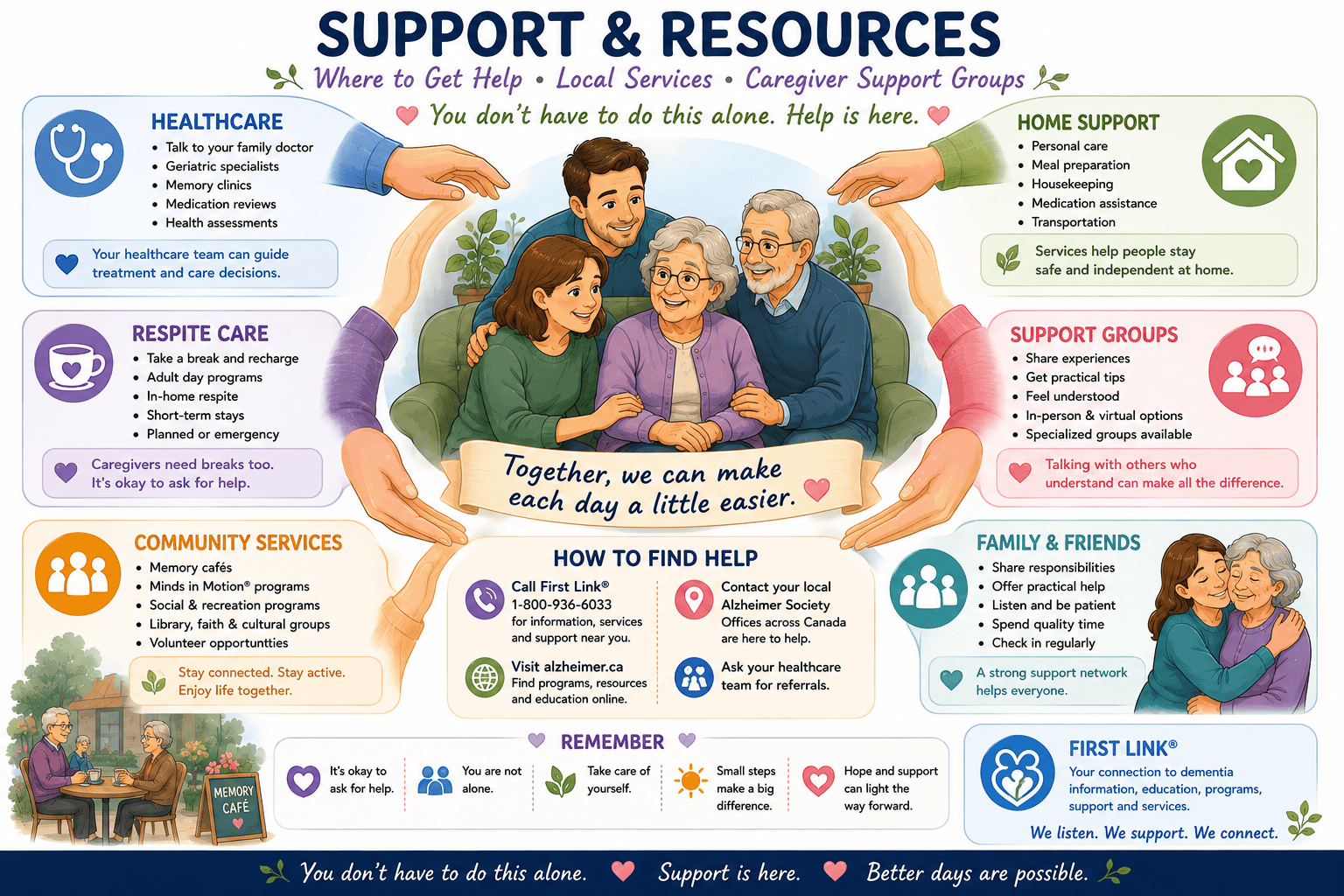
There are organizations and community services throughout Canada that can help people living with dementia and the family members, friends and caregivers supporting them. The Alzheimer Society, for example, provides education, referrals, individual support and support groups across Canada.
Support can take many different forms. Sometimes it means having someone answer questions about dementia or explain what changes you may expect. Other times it may mean finding respite care, transportation, meal programs, home-support services, adult day programs or help navigating the healthcare system. Knowing what services are available before a crisis occurs can make difficult situations much easier to manage.
Caregiver support groups can also be incredibly valuable. Talking with people who are facing similar challenges can provide practical ideas, reassurance and a place to speak openly about experiences that other people may not fully understand. Some groups meet in person, while others are available online or by telephone, making it easier for caregivers who cannot leave the person they are caring for.
Where Do I Start?
If someone has recently been diagnosed—or you’re simply starting to realize that your family needs help—the amount of information can feel overwhelming. Start small.
Ask yourself: What is the biggest problem we need help with today?
It might be understanding the diagnosis. It might be keeping someone safe at home. Maybe the caregiver desperately needs a break. Perhaps you need transportation, meal assistance, an adult day program or simply someone knowledgeable to talk to.
You don’t need to solve the next five years today. Start with the problem immediately in front of you.
Help at Home
Many people with dementia are able to remain in their own homes for quite some time, particularly when appropriate supports are put into place.
Depending upon the person’s needs and what’s available locally, support may include:
Home support • Personal care • Meal preparation • Medication assistance • Transportation • Housekeeping • Adult day programs • Respite care • Occupational or physical therapy • Safety assessments
A family doctor or healthcare team can also help determine which services may be appropriate and how to access publicly funded programs in your province.
Help at Home
Many people with dementia are able to remain in their own homes for quite some time, particularly when appropriate supports are put into place.
Depending upon the person’s needs and what’s available locally, support may include:
Home support • Personal care • Meal preparation • Medication assistance • Transportation • Housekeeping • Adult day programs • Respite care • Occupational or physical therapy • Safety assessments
A family doctor or healthcare team can also help determine which services may be appropriate and how to access publicly funded programs.

First Link® — A Great Place to Begin
One resource I would feature prominently is First Link® from the Alzheimer Society.
It is specifically designed to connect people living with dementia and their care partners with information, education, programs, services and ongoing support. You don’t necessarily need to wait until things become difficult before reaching out.
For someone staring at this website thinking:
“I don’t even know what I’m supposed to do next.”
That’s exactly the type of situation where a navigation service can be valuable.
First Link® can help families understand what resources are available in their own community and which ones may be appropriate for their particular situation. Rather than spending hours trying to figure out who to call or where to begin, families can be connected with knowledgeable people who understand dementia and the challenges that often come with it.
Caregiver Support Groups
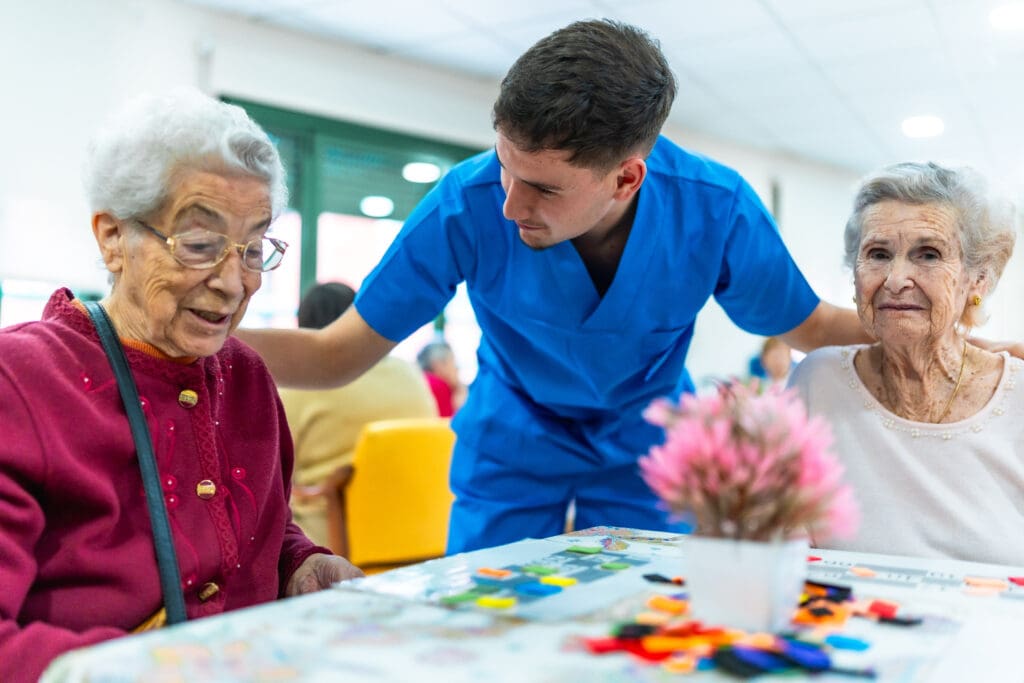
Being a dementia caregiver can sometimes feel incredibly isolating.
Friends and even other family members may genuinely care but not completely understand what everyday life is like.
A caregiver may be dealing with the same question being asked repeatedly, disrupted sleep, personality changes, wandering, appointments, financial responsibilities and the emotional difficulty of watching someone they love change.
Talking to people who actually understand can make a difference.
Support groups give caregivers an opportunity to:
Talk openly • Ask questions • Share experiences • Learn practical strategies • Find local resources • Hear what’s worked for other families • Feel less alone
The Alzheimer Society of BC and Yukon currently offers both in-person and virtual Family Caregiver Support Groups, including specialized groups for adult children, people caring for someone in long-term care, young-onset dementia, Lewy body dementia and other circumstances.

Memory Cafés & Social Programs
Not every form of support needs to feel clinical.
Some communities have Memory Cafés, dementia-friendly social groups, exercise programs, music programs and recreational activities where people living with dementia and their care partners can participate together.
Programs such as the Alzheimer Society’s Minds in Motion® combine appropriate activity with opportunities for social interaction.
These programs can provide something extremely important:
A chance to enjoy life together not spend every moment talking about dementia.

Respite Care — Caregivers Need Breaks Too
Respite care means another qualified person or service temporarily takes over some caregiving responsibilities.
That might mean a few hours. It could involve an adult day program.
In some circumstances, longer respite arrangements may be available.
The purpose isn’t simply convenience. A caregiver needs time to sleep, work, attend appointments, see friends, spend time with other family members—or simply have a few hours where they aren’t responsible for someone else.
Getting help shouldn’t be viewed as giving up.
It can be one of the things that makes continuing to care for someone possible.

Support for the Person Living With Dementia
We also shouldn’t make this page entirely about caregivers.
A person diagnosed with dementia may need:
Someone to talk to • Education about their diagnosis • Social activities • Peer support • Help maintaining independence • Assistance planning for the future • Opportunities to remain involved in decisions
Where possible, the person living with dementia should continue to have a voice in decisions about their life, care and future.

And Support for the Caregiver
Caregivers sometimes become so focused on the person with dementia that their own life slowly disappears.
Eating properly, sleeping, exercising, seeing friends, attending medical appointments and having time away from caregiving aren’t luxuries.
They’re part of remaining healthy enough to continue caring.
Sometimes the most helpful sentence another family member can say isn’t:
“Call me if you need anything.”
It’s: “I’m coming over Tuesday. You have the afternoon off.”
That’s actual help.
Trustworthy Canadian Organizations
YOU DON’T HAVE TO DO THIS ALONE.
Ask questions. Accept help. Connect with others.
Whether you are living with dementia, caring for someone you love, or simply trying to understand what comes next, support is available—and asking for help can be one of the most important steps you take.
- Alzheimer Society of Canada — First Link® — An excellent starting point for people living with dementia and caregivers. First Link connects families with one-on-one and group support, local healthcare and community services, education, planning help, and other people going through similar experiences.
- HealthLink BC — Dementia: Support for Caregivers — Very practical information specifically for caregivers, including caregiver stress, getting enough rest, looking after your own health, finding support, counselling and support groups. It also connects BC residents with health information through 8-1-1.
- Alzheimer Society of BC & Yukon — Home Support & Care Services — This one is particularly useful for the BC section of the website. It explains how to find home support, caregiver groups, dementia education, Minds in Motion®, individual support and the First Link® Dementia Helpline, and it links families to BC health authorities and other community-care resources.