
Prevention & Brain Health
Prevention & Brain Health
Small choices today can help support a healthier brain tomorrow.
Our brains change as we age, just like the rest of our bodies. While there is no guaranteed way to prevent dementia, research suggests that taking care of our overall health can also help take care of our brain.
The encouraging part is that brain health isn’t about doing one perfect thing. Eating well, staying active, getting enough sleep, challenging your mind, staying socially connected and looking after your heart and overall health can all play a part.
And it’s never too early or too late to start.
Keeping your brain active doesn’t have to mean doing complicated puzzles every day. Reading, playing games, learning a new skill, listening to or playing music, gardening, volunteering, travelling, creating something, or simply having interesting conversations can all keep the mind engaged. Variety is important; giving your brain new experiences and challenges can be beneficial at any age.
Social connection matters too. Spending time with people we care about, participating in community activities and maintaining friendships can support our mood, sense of purpose and overall brain health. Even a phone call, coffee with a friend or regular family get-together can make a difference.
Diet & Nutrition
Feed your body. Feed your brain.
The brain needs a steady supply of nutrients and healthy blood flow to function properly. Rather than focusing on one “miracle food,” a healthy eating pattern is more important.
A brain-friendly diet generally includes plenty of:
- Vegetables and leafy greens
- Fruits and berries
- Whole grains
- Beans and legumes
- Nuts and seeds
- Fish and other sources of healthy fats
- Healthy oils, such as olive or canola oil
- Water and other unsweetened beverages
At the same time, it can be helpful to limit highly processed foods, excessive added sugar, foods high in saturated fat and excessive alcohol.
Eating well also supports heart and blood-vessel health, which is important because the brain depends on a healthy blood supply.
A simple way to remember it:
What’s good for your heart is often good for your brain.ress more quickly.
Exercise & Physical Activity
Get the body moving and the brain benefits too.
Physical activity is one of the most useful things we can do for our overall health.
Exercise supports the heart and circulation, helps maintain strength and balance, can improve mood and sleep, and is associated with better brain health.
And exercise doesn’t have to mean joining a gym.
It could be:
Walking • Gardening • Swimming • Dancing • Cycling • Housework • Hiking • Playing with the grandchildren • Taking the stairs
The goal is to move regularly and reduce long periods of sitting.
For many adults, Canadian guidance recommends working toward about 150 minutes of moderate-to-vigorous physical activity each week, along with muscle-strengthening activities. But even smaller amounts of movement are worthwhile, particularly for someone who is currently inactive.
The right amount and type of exercise will depend on a person’s age, mobility and health.

Exercise & Physical Activity
Get the body moving and the brain benefits too.
Physical activity is one of the most useful things we can do for our overall health.
Exercise supports the heart and circulation, helps maintain strength and balance, can improve mood and sleep, and is associated with better brain health.
And exercise doesn’t have to mean joining a gym.
It could be:
Walking • Gardening • Swimming • Dancing • Cycling • Housework • Hiking • Playing with the grandchildren • Taking the stairs
The goal is to move regularly and reduce long periods of sitting.
For many adults, Canadian guidance recommends working toward about 150 minutes of moderate-to-vigorous physical activity each week, along with muscle-strengthening activities. But even smaller amounts of movement are worthwhile, particularly for someone who is currently inactive.
The right amount and type of exercise will depend on a person’s age, mobility and health..

Sleep & Brain Health
Your brain needs downtime too.
Sleep isn’t simply the time when the brain “switches off.”
While we’re sleeping, the brain is busy processing information, supporting memory and carrying out important maintenance functions.
Poor or disrupted sleep can affect:
Memory • Concentration • Mood • Energy • Judgment • Reaction time
Good sleep habits can include keeping a fairly regular bedtime and wake time, getting daylight and physical activity during the day, limiting caffeine late in the day, and creating a quiet and comfortable sleeping environment.
Persistent sleep problems such as severe snoring, pauses in breathing during sleep, or ongoing insomnia are worth discussing with a healthcare professional. It can also help to pay attention to what may be interrupting your sleep.
Pain, stress, medications, alcohol, frequent trips to the bathroom, snoring and sleep apnea can all interfere with getting a restful night’s sleep. Sometimes improving sleep means addressing the reason you’re waking up rather than simply trying to spend more hours in bed.

Mental Stimulation
Give your brain something to do.
Our brains benefit from being used and challenged.
That doesn’t mean everyone needs to sit down and do complicated crossword puzzles every day. The best mental activity is often something you actually enjoy and want to continue doing.
Try:
Reading • Puzzles • Cards • Board games • Learning an instrument • Crafts • Building things • Cooking • Learning a language • Taking a class • Using technology • Learning a new hobby
Learning something new can be particularly valuable because you’re asking the brain to pay attention, remember information and develop new skills.
The key isn’t necessarily being good at it.

Social Connection
Connection is good for the brain.
Human beings are social creatures.
Regular interaction with family, friends and the community can provide conversation, mental stimulation, emotional support and a sense of belonging.
Social connection doesn’t have to mean having dozens of friends.
It might mean:
Calling a friend • Having coffee with a neighbour • Joining a club • Volunteering • Attending a community centre • Playing cards • Going to a place of worship • Joining an exercise group • Spending time with family
For someone who lives alone, even regularly scheduled phone or video conversations can help maintain connection.
Protect Your Brain
Your brain is worth protecting throughout your life.
Head injuries are associated with an increased risk of dementia later in life.
Simple precautions matter:
Wear a helmet when appropriate, use a seat belt, reduce fall hazards around the home, use proper safety equipment at work and take extra precautions during activities where head injuries are possible.
For older adults, maintaining strength and balance can also help reduce the risk of falls.
Smoking & Alcohol
Smoking damages blood vessels throughout the body—including the vessels supplying the brain.
Quitting smoking can improve health at virtually any age.
Alcohol deserves a careful message as well. Alcohol should not be promoted as a way of preventing dementia. Heavy alcohol use can harm the brain and increase other health risks.
For people who drink alcohol, Canada’s current health guidance emphasizes that less alcohol means less health risk.

Brain Health Is Whole-Body Health
Connection is good for the brain.
This could be the main visual message on the page.
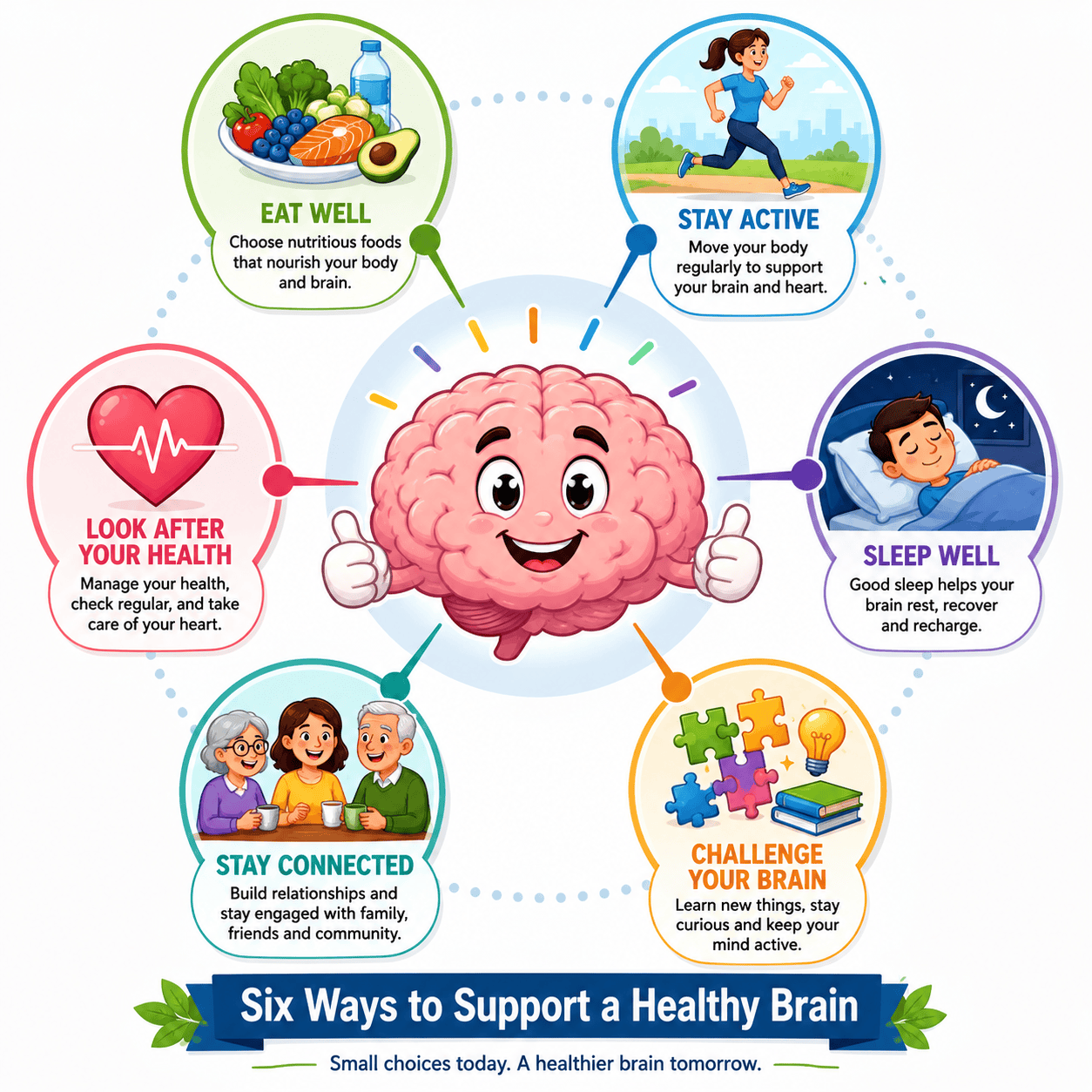
Instead of making visitors remember a giant list, give them six simple pillars:
EAT WELL
Give your body and brain nutritious foods.
MOVE OFTEN
Keep your heart, muscles and circulation active.
SLEEP WELL
Give your brain time to rest and recover.
KEEP LEARNING
Challenge your brain with new experiences.
STAY CONNECTED
Maintain relationships and participate in your community.
LOOK AFTER YOUR HEALTH
Manage blood pressure, cholesterol, diabetes, hearing, vision and other health concerns.
It’s Never Too Late to Start
Can Dementia Actually Be Prevented?
There are no guarantees.
Someone can live an extremely healthy life and still develop dementia. Likewise, dementia isn’t proof that someone did something wrong.
Age and genetics are among the factors we cannot change.
But there are risk factors we can influence, and evidence increasingly suggests that addressing those factors throughout life may reduce the likelihood of developing dementia or delay its onset for some people.
That’s an empowering message without promising something medicine can’t promise.
Alzheimer Society of Canada — 12 Actions for a Healthier Brain
This is probably my first choice for your website. It’s written for everyday people and provides practical ways to improve brain health and potentially reduce dementia risk, including physical activity, social connection and healthy behaviours.
12 Actions for a Healthier Brain – Alzheimer Society of Canada- Government of Canada — Dementia Risk Factors & Prevention
This is an excellent authoritative resource from the Public Health Agency of Canada. It discusses physical activity, diet, sleep, learning new things, social interaction, blood pressure, diabetes, cholesterol, hearing and vision, smoking, alcohol and other factors that can influence dementia risk.
Dementia: Risk Factors & Prevention – Government of Canada - Alzheimer Society of Canada — Risk Factors for Dementia
This one complements the other two nicely because it explains the difference between risk factors we may be able to change and things we cannot change, such as age. It also covers hearing loss, social isolation, head injuries, smoking and other important areas.
Risk Factors for Dementia – Alzheimer Society of Canada